What Is REM Sleep? Benefits, Stages, and How Much You Need
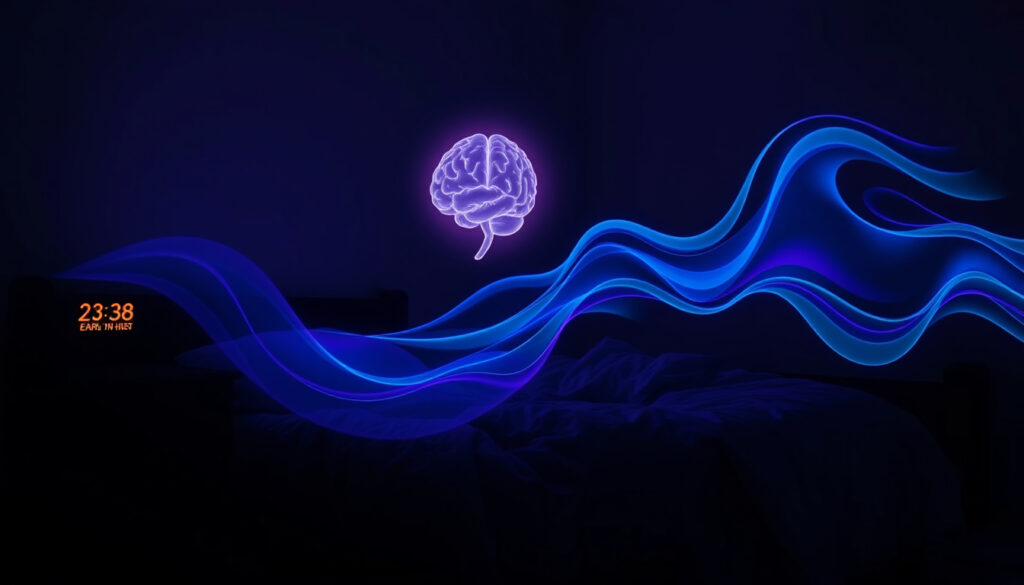
Anyone who’s ever woken up mid-dream, heart racing and mind ablaze, already knows REM sleep is something special – it’s the stage where your brain is almost as active as when you’re awake, yet your body is temporarily paralyzed.
REM sleep proportion in adults: 20-25% of total sleep ·
Average REM per night: 90 minutes ·
First REM episode onset: Approximately 90 minutes after falling asleep ·
REM sleep in newborns: About 50% of total sleep time
Quick snapshot
- REM sleep is essential for memory consolidation (Sleep Foundation (nonprofit sleep health organization))
- Dreaming is most vivid during REM (Sleep Foundation)
- REM sleep deprivation impairs cognitive function (Kenhub (medical education platform))
- Sleep cycles repeat every 90 minutes (Kenhub)
- Exact biological purpose of dreaming (Sleep Foundation)
- Whether needed REM varies significantly between individuals (AAST (American Association of Sleep Technologists))
- Long-term effects of chronic REM suppression beyond a few weeks (Harvard Health (Harvard Medical School publishing))
- REM sleep typically appears about 90 minutes after falling asleep (UCI Health (university medical center))
- First REM period is short; later REM periods become longer (Tylenol (consumer health brand))
- REM sleep is concentrated in the latter half of the night (UCI Health)
- Understanding REM sleep can help you improve sleep patterns and cognitive health (Harvard Health)
- Practical strategies like a regular schedule and limiting alcohol can support REM (Harvard Health)
- Emerging research continues to explore REM’s role in emotional regulation (StatPearls / NCBI Bookshelf (National Institutes of Health resource))
Here are the key numbers at a glance.
| Fact | Value |
|---|---|
| REM sleep proportion in adults | 20-25% of total sleep |
| Average REM per night | 90 minutes |
| First REM episode onset | Approximately 90 minutes after falling asleep |
| REM in newborns | About 50% of total sleep time |
| Number of REM cycles per night | 4-6 |
What is REM Sleep?
What happens during REM sleep?
- Rapid eye movements are the defining characteristic (Harvard Health).
- Brain activity increases to levels similar to wakefulness (Sleep Foundation).
- Temporary muscle atonia (paralysis) prevents acting out dreams (Harvard Health).
- Heart rate, blood pressure, and breathing rise relative to deeper NREM stages (Harvard Health).
Why is it called rapid eye movement sleep?
The name comes directly from the observable eye movements that occur behind closed eyelids. These movements are not random; they often correlate with the visual content of dreams. Scientists first identified this stage in the 1950s using electrooculography, and it remains the primary marker for REM sleep in polysomnography (StatPearls / NCBI Bookshelf).
The brain activity during REM rivals that of wakefulness. For memory and learning, this stage is a nightly rewiring session — and without enough of it, cognitive sharpness dulls fast.
The implication: REM isn’t just “dream sleep.” It’s a distinct neurobiological state that supports memory consolidation and emotional processing. Without it, the brain struggles to sort and store the day’s experiences.
How Much REM Sleep Do You Need?
How many hours of REM sleep per night?
- Adults typically need about 90 minutes of REM sleep per night (Sleep Foundation).
- REM sleep makes up 20-25% of total sleep in healthy adults (AAST).
- Newborns spend about 50% of their sleep in REM (Sleep Foundation).
- As people age, REM proportion decreases slightly (Sleep Foundation).
Is 30 minutes of REM sleep enough?
Thirty minutes is far below the typical 90-minute target for adults. A short REM duration can impair memory consolidation and emotional regulation (Kenhub). In a single sleep cycle, REM lasts about 5 to 15 minutes early in the night, lengthening to 20-30 minutes later on — so multiple cycles are needed to reach adequate total.
The pattern: If you’re consistently sleeping only 5-6 hours, you’re likely shortchanging REM because the longest REM periods occur in the final third of the night. The first cycle’s REM may be brief, but later cycles deliver the bulk.
REM Sleep vs. Deep Sleep: What’s the Difference?
Key differences between REM and deep sleep
Three major dimensions, one contrast: REM is for the mind, deep sleep is for the body.
| Dimension | REM Sleep | Deep Sleep (N3) |
|---|---|---|
| Primary function | Memory consolidation, learning, emotional regulation (Sleep Foundation) | Physical restoration, growth, immune function (Sleep Foundation) |
| Brain activity | High, similar to wakefulness (Harvard Health) | Low, dominated by slow delta waves (Sleep Foundation) |
| Body state | Muscle atonia; heart rate and breathing variable (Harvard Health) | Muscle tone, pulse, and breathing low and steady (Sleep Foundation) |
| When it occurs in the night | Later half, especially after the first cycle (UCI Health) | Earlier half, mostly first half of the night (Healthylife (Australian health resource)) |
| Percentage of total sleep | 20-25% (AAST) | 10-20% (Sleep Foundation) |
| Dreaming | Most vivid dreams occur here (Sleep Foundation) | Less dreaming; thoughts may be fragmentary |
| Effect of deprivation | Impaired memory, mood, and learning (Kenhub) | Physical fatigue, reduced recovery (Healthylife) |
Which type of sleep is more important?
Both are essential. Deep sleep focuses on physical repair — releasing growth hormone, rebuilding muscle and bone (Healthylife). REM focuses on mental restoration — consolidating memories and processing emotions. Skimping on either has distinct consequences, but a healthy sleep architecture requires both.
You can’t directly prioritize one over the other — your body cycles naturally. But sleep hygiene choices (alcohol, caffeine, schedule) shift the balance. Alcohol, in particular, suppresses REM while sparing deep sleep early on (Harvard Health).
What Does REM Sleep Do?
Role in memory consolidation
During REM, the brain replays and strengthens neural connections formed during the day. This process, called synaptic consolidation, is critical for learning new skills and retaining facts (Sleep Foundation). Without adequate REM, newly acquired information fades faster. For students or anyone learning a new job, REM sleep is the night shift that files what you learned.
Emotional regulation during REM
REM sleep helps process emotions by re-evaluating stressful experiences in a safe, neurochemically distinct state. The brain essentially “tags” emotional memories for long-term storage while reducing the associated stress response (Kenhub). Chronic REM deprivation can leave people emotionally reactive or irritable.
Dreaming and REM sleep
While you can dream in other stages, REM produces the longest, most narrative, and most vivid dreams (Sleep Foundation). The high brain activity during REM generates complex storylines, often involving recent experiences mixed with long-term memory fragments.
Your brain works harder during REM than during deep sleep — yet your body is locked in temporary paralysis. It’s the only time your mind can be hyperactive while your limbs are totally offline. That’s not a bug; it’s the design that keeps you safe while you process the day.
The pattern: REM sleep’s functions are uniquely cognitive — memory, emotion, creativity. Without it, the brain’s nightly maintenance goes undone, and cognitive performance slips the next day.
The 4 Stages of Sleep and Where REM Fits In
NREM Stage 1, Stage 2, Stage 3
- N1 (light sleep): Transition from wakefulness to sleep; easy to wake.
- N2 (stable sleep): Heart rate slows, body temperature drops; sleep spindles appear.
- N3 (deep sleep / slow-wave sleep): Delta waves; hardest to wake; physical restoration occurs (Sleep Foundation).
REM Stage 4
After N3, the cycle moves back through N2 and then into REM. This stage is sometimes called stage 4 in older classification systems, but modern sleep medicine groups it as the final phase of each cycle (StatPearls / NCBI Bookshelf).
How sleep cycles repeat
- A full NREM-REM cycle lasts about 90 minutes (Kenhub).
- Most people go through 4 to 6 cycles per night.
- The proportion of REM increases in later cycles — from about 5-10 minutes in cycle 1 to 20-30 minutes in the final one (Tylenol).
- Deep sleep dominates the first half of the night; REM dominates the second half.
Why this matters for sleep quality: If you wake up early every day, you’re consistently cutting off the REM-rich final cycles. That’s why a full 7-9 hours matters more than just hitting a sleep duration number.
What’s Confirmed and What’s Unclear About REM Sleep
Confirmed facts
- REM sleep is essential for memory consolidation (Sleep Foundation)
- Dreaming is most vivid during REM (Sleep Foundation)
- REM sleep deprivation impairs cognitive function (Kenhub)
What’s unclear
- Exact biological purpose of dreaming (Sleep Foundation)
- Whether the amount of REM needed varies significantly between individuals (AAST)
- Long-term effects of chronic REM suppression beyond a few weeks (Harvard Health)
- Whether sleep cycles repeat exactly every 90 minutes for all individuals (Tylenol)
This distinction helps separate established knowledge from areas of ongoing investigation.
Expert Perspectives on REM Sleep
“During REM sleep, your heart rate, blood pressure, brain activity, and breathing increase.”
— Harvard Health Publishing (medical division of Harvard Medical School)
“REM sleep stimulates areas of the brain essential to learning, as well as making and maintaining memories.”
— National Sleep Foundation (nonprofit sleep health advocacy)
Alcohol is a known REM suppressant. A drink before bed may help you fall asleep faster, but it reduces the time your brain spends in REM later in the night. For anyone prioritizing mental performance, skipping that nightcap is a practical choice (Harvard Health).
For anyone looking to improve cognitive performance and emotional well-being, protecting REM sleep is non-negotiable: prioritize consistent sleep hours and avoid alcohol before bed, or risk losing the nightly brain maintenance that sharpens memory and stabilizes mood.
sleepfoundation.org, sleepfoundation.org, youtube.com, womanshospital.com
Frequently Asked Questions
Can you get too much REM sleep?
While there’s no established upper toxicity limit, unusually high REM (above 30-35% of total sleep) can occur with certain antidepressants or as a rebound effect after REM deprivation. It’s generally not harmful, but it may indicate an underlying sleep disorder like narcolepsy (Sleep Foundation).
Does REM sleep decrease with age?
Yes. Newborns spend about 50% of sleep in REM. By adulthood, it drops to 20-25%, and in older adults it can fall below 20%. However, the absolute time in REM depends more on total sleep duration than age alone (Sleep Foundation).
How to increase REM sleep naturally?
Establish a consistent sleep schedule, avoid alcohol and caffeine in the evening, and aim for 7-9 hours of total sleep. Because REM concentrates in the second half of the night, sleeping longer (not just earlier) directly increases REM minutes (Harvard Health).
Is REM sleep the only time you dream?
No. Dreams can occur in NREM stages as well, but they tend to be shorter, less vivid, and more thought-like. The most elaborate, story-like dreams happen during REM (Sleep Foundation).
What happens if you don’t get enough REM sleep?
Short-term effects include difficulty concentrating, memory lapses, and mood changes. Chronic deprivation can impair learning and emotional regulation. However, the body does try to compensate — after a few nights of short REM, subsequent nights may show “REM rebound” (more time in REM) (Kenhub).
Do babies have more REM sleep than adults?
Yes. Newborns spend about 50% of their sleep time in REM — roughly double the adult proportion. This is thought to support rapid brain development and neural wiring in infancy (Sleep Foundation).
Does alcohol affect REM sleep?
Yes. Alcohol is a potent REM suppressant. Even a moderate dose before bed reduces REM time, particularly in the first half of the night. As the alcohol metabolizes, REM may rebound later, but overall REM is lower than normal (Harvard Health).
These answers clarify common points of confusion about REM sleep.
More related posts
 How to Get Rid of a Stomach Ache in 5 Minutes: Fast Remedies
 Brigham and Women’s Hospital: Guide to Boston’s Top Facility
 Heat Pump Water Heater: Worth It? Costs, Winter & Martin Lewis
 Heat Pump Water Heater: Worth It? Costs & Downsides
 Severance Season 2 Episode 8 – Recap and Analysis
 How Old Is Hulk Hogan – 71 at Death, Bio Facts
 Symptoms of Mold Exposure: How to Know, Test, and Recover
 Water Restoration Company Near Me: Services, Costs & Steps