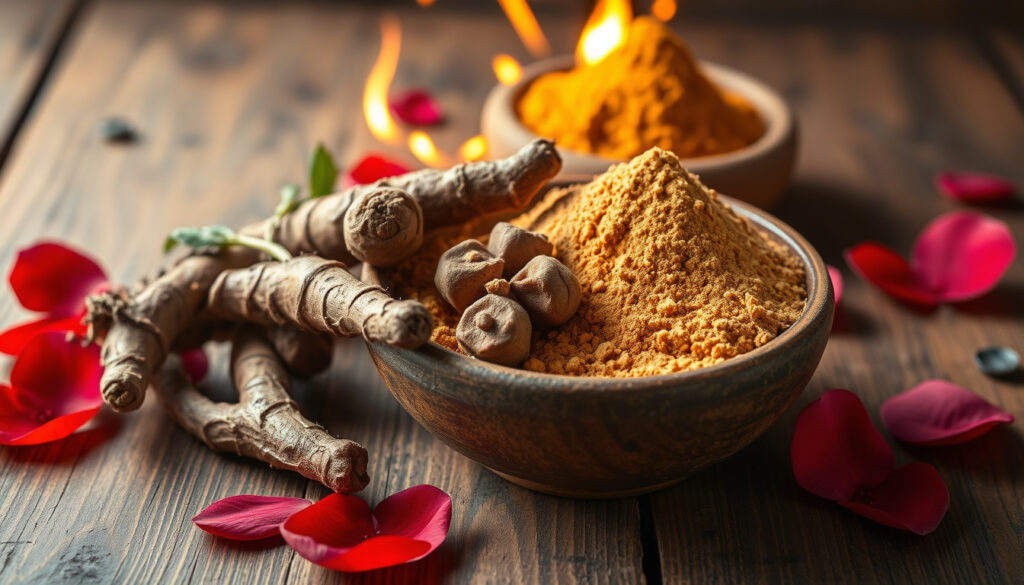
Does Ashwagandha Make You Horny? Libido Effects Guide
If you’ve spent any time in fitness forums or supplement shops lately, you’ve probably heard the buzz — ashwagandha supposedly cranks up your sex drive and testosterone. But scroll past the marketing hype and you find something more nuanced: a handful of clinical trials on real people, mixed results depending on who you’re studying, and a whole lot of “it depends.” The data is actually more interesting than the headlines suggest.
Testosterone Increase: +17% in men ·
Libido Enhancement: Reported after 8 weeks ·
Key Hormone Boost: +14.7% testosterone, +18% DHEA-S
Quick snapshot
- Men’s testosterone rises 14-17% after 8 weeks (PMC RCT, PMC Crossover Study)
- Effects strongest in stressed or infertile men (Ubie Health Medical Guide)
- DHEA-S hormone also increases by 18% (PMC Crossover Study)
- How much “horniness” actually increases — most trials measured testosterone, not arousal directly (NIH Office of Dietary Supplements)
- Women’s libido effects remain understudied compared to men (NIH Office of Dietary Supplements)
- Long-term safety beyond 3 months is unknown (NIH Office of Dietary Supplements)
- 2015: Overweight men study shows 96.2 ng/dL rise
- 2019: Crossover RCT confirms 14.7% testosterone increase
- 2022: 8-week sexual wellness trial shows 17% rise
- Larger, diverse population trials needed
- Ashwagandha won’t replace medical testosterone therapy
- Consider timing (morning), cycling, and lifestyle factors
Here are the key clinical findings distilled into a reference table.
| Factor | Clinical finding |
|---|---|
| Primary use | Adaptogen herb (Withania somnifera) |
| Libido impact | Positive in 8-week trials |
| Testosterone effect | +17% in men after 8 weeks |
| ED support | Indirect via stress reduction |
| Key hormone boost | +14.7% testosterone, +18% DHEA-S |
| Dose used | 300mg twice daily in trials |
| Safety | Well-tolerated up to 3 months |
Does taking ashwagandha make you hornier?
The honest answer is: probably somewhat, for men at least. But the mechanism isn’t straightforward. Ashwagandha doesn’t work like a stimulant or aphrodisiac in the way you might expect — it works through stress reduction and hormonal support.
Effects on men
Clinical trials show meaningful testosterone increases in men who take ashwagandha consistently. An 8-week randomized controlled trial published in PMC found that men taking ashwagandha saw their serum testosterone rise by 17% (72 ng/dL), compared to just 2% in the placebo group. That’s a meaningful difference for someone dealing with low energy or low libido.
A 2019 crossover study found similar results: 14.7% testosterone increase and 18% DHEA-S increase over the same period. These aren’t massive surges — you’re not going to transform into a teenager — but the effects appear real and measurable.
The effects are more pronounced in men who are stressed, dealing with fertility issues, or doing resistance training. For a healthy 25-year-old with balanced hormones and low stress, you might notice less benefit than the trial participants did.
Testosterone and DHEA-S are the primary drivers of male libido. When these hormones rise even modestly, the downstream effect on sexual desire and arousal can be noticeable — especially if you started with lower levels due to stress or age.
Effects on women
The evidence for women is thinner. The Memorial Sloan Kettering Cancer Center notes that clinical data on ashwagandha and female sexual health is limited compared to men. What we do know suggests it may help with climacteric (menopausal transition) symptoms, which can include reduced libido.
One trial found that women taking ashwagandha reported easier sexual arousal compared to placebo. But the sample sizes were small, and the mechanisms aren’t well-understood. If you’re a woman considering ashwagandha specifically for libido, you should know the evidence base is considerably weaker than it is for men.
The bigger picture: ashwagandha appears to support overall hormone balance in women going through perimenopause, which might indirectly help libido. But don’t expect the same testosterone-driven effects that work for men.
Does ashwagandha make a man hard?
This question actually has two parts: can ashwagandha improve erections, and does it affect erectile dysfunction? The data points toward indirect benefits rather than direct effects on the vascular mechanisms involved in erections.
Impact on erections
Erections are partly a testosterone story — low T makes it harder to get and maintain an erection — but they’re also very much a blood flow and stress story. Here’s where ashwagandha gets interesting.
By lowering cortisol (the stress hormone), ashwagandha removes one of the biggest erection-killers. The NIH Office of Dietary Supplements notes that a 225mg dose lowers saliva cortisol compared to placebo. Since stress is a leading cause of situational erectile difficulties, reducing it can indirectly improve performance.
The 2021 systematic review covering 7 studies and 491 adults found consistent stress and anxiety reduction over 6-8 weeks. Less anxiety in the bedroom often translates to better erections.
Erectile dysfunction support
For men with clinically low testosterone contributing to ED, ashwagandha isn’t a replacement for medical treatment. Researchers at Ubie Health explicitly note that ashwagandha is not a replacement for medical therapy in clinically low testosterone.
However, for the much larger group of men whose ED is stress-related or tied to mildly suboptimal testosterone, ashwagandha may provide meaningful support. The combination of modest testosterone boost plus cortisol reduction addresses two contributing factors simultaneously.
Men with diagnosed erectile dysfunction should not expect ashwagandha to resolve it alone. Consider it one potential piece of a broader approach that may include lifestyle changes, medical consultation, and other interventions.
The implication: for performance anxiety-related ED or borderline testosterone levels, ashwagandha offers a low-risk complementary approach. For clinical ED, it shouldn’t replace doctor-recommended treatments.
Can ashwagandha make you more wet?
This is asking about female arousal and vaginal lubrication specifically. The short answer: the evidence is suggestive but not strong enough to make definitive claims.
Female arousal effects
The Memorial Sloan Kettering Cancer Center describes ashwagandha as having “aphrodisiac qualities” in traditional use, but notes that clinical evidence for female arousal is limited. One trial found that women taking ashwagandha reported easier sexual arousal compared to placebo, which is worth noting.
The proposed mechanism involves ashwagandha’s effects on stress hormones and possibly thyroid function. The NIH Office of Dietary Supplements cites a trial where 300mg twice daily for 8 weeks improved thyroid hormones in people with subclinical hypothyroidism — and thyroid function can affect sexual arousal and lubrication.
Vaginal lubrication
Direct evidence for improved vaginal lubrication from ashwagandha specifically is sparse. Most sexual health trials in women have focused on general satisfaction or climacteric symptom relief rather than specific lubrication measures.
The practical reality: if reduced libido or arousal difficulty stems from stress or hormonal fluctuations during perimenopause, ashwagandha’s stress-reducing and hormone-balancing effects might help. But there’s no strong clinical trial demonstrating direct lubrication benefits the way we see testosterone benefits in men.
The pattern: ashwagandha shows more promise for female sexual function when the issue is stress-related or part of the menopausal transition. If the issue is something else entirely, you’re probably better off with targeted approaches.
Does ashwagandha affect hormone health?
This is where the strongest evidence lies — ashwagandha genuinely affects several hormone pathways in measurable ways.
Testosterone changes
The data on testosterone is consistent across multiple trials. A 2019 meta-analysis cited in PMC examined 4 trials on infertility and found that ashwagandha increases sperm parameters and testosterone in oligospermic (low-sperm-count) males.
The 2022 sexual wellness trial specifically found that ashwagandha improves subjective sexual well-being and testosterone in men. Men aged 40-70 saw a 15% testosterone increase and 18% DHEA increase over 16 weeks in one study cited by Everlywell.
However, the NIH Office of Dietary Supplements issues an important caution: ashwagandha may increase testosterone, which could be unsafe for men with hormone-sensitive prostate cancer. Anyone with a history of prostate cancer or testosterone-sensitive conditions should avoid ashwagandha without medical supervision.
Fertility impacts
For men dealing with infertility, ashwagandha shows more promise than for the general male population. The mechanism involves not just testosterone but also improvements in sperm count, motility, and overall sperm health parameters.
The ASVAMAN trial lasting 42 days showed significantly increased serum testosterone versus placebo in a group of men, suggesting these effects may extend to fertility-relevant parameters.
However, most trials were conducted in India, which the NIH Office of Dietary Supplements notes may limit generalizability to other populations. The effects seen in Indian men may not perfectly translate to all ethnic and geographic groups.
Is ashwagandha similar to Viagra?
No — and understanding why matters for managing expectations. These compounds work through entirely different mechanisms.
ED safety
Viagra (sildenafil) and similar PDE-5 inhibitors work by increasing blood flow to the penis through a direct pharmacological mechanism. They work within hours and are designed specifically for erectile dysfunction.
Ashwagandha works indirectly: by reducing stress (which can interfere with erections) and supporting testosterone (which drives libido), it may improve sexual function over weeks rather than hours. It’s a slower, more systemic approach rather than an immediate mechanical one.
Combination use
Some men wonder whether they can stack ashwagandha with Viagra. The theoretical concern is that both affect blood pressure and cardiovascular function — ashwagandha through stress reduction and potential thyroid effects, Viagra through vasodilation.
The NIH Office of Dietary Supplements notes that ashwagandha can potentially cause liver and thyroid adverse effects in some users. Combining it with medications that affect cardiovascular function should only be done under medical supervision.
If you’re considering ashwagandha and already on ED medication, have that conversation with your doctor first. Self-experimentation with supplement stacks isn’t advisable when cardiovascular medications are involved.
The comparison: ashwagandha is like building a better foundation for your car’s engine — it may help the whole system run better over time. Viagra is like adding a turbocharger directly to the fuel injection — it works fast and specifically. Both have their place, but they’re not interchangeable.
Upsides
- Modest but measurable testosterone increase (+14-17%)
- Significant DHEA-S boost (+18%)
- Reduces cortisol and stress effectively
- May improve sperm parameters in infertile men
- Supports thyroid function in subclinical hypothyroidism
- Well-tolerated up to 3 months in trials
- May ease sexual arousal in women during perimenopause
Downsides
- Not a replacement for clinical low testosterone treatment
- Effects weaker in healthy, unstressed individuals
- Limited long-term safety data beyond 3 months
- Potential liver and thyroid adverse effects
- Unsafe for hormone-sensitive prostate cancer patients
- Most trials in Indian populations — generalizability unclear
- Women’s libido benefits less studied than men’s
What the experts say
Ashwagandha demonstrated a significant subjective perception of sexual well-being and assisted in increasing serum testosterone levels.
— PMC Researchers (Clinical trial authors)
Yes, ashwagandha can modestly boost testosterone in some men, particularly those who are stressed, have infertility, or are engaging in resistance training.
Ashwagandha use might also increase testosterone levels, so it might not be safe for men with hormone-sensitive prostate cancer.
— NIH Office of Dietary Supplements (Health professionals)
For men dealing with stress-related libido issues or mildly suboptimal testosterone, ashwagandha offers a reasonable, evidence-supported option. The clinical data supports modest but real hormone changes after 8+ weeks of consistent use. Women should temper expectations — the evidence base is thinner and the mechanisms less clear.
The reality is that ashwagandha won’t replicate the immediate effects of pharmaceutical interventions, but it addresses some root causes that medications don’t touch. For gym-goers, stressed professionals, or men in their 40s-70s dealing with age-related hormone shifts, the trade-off may be worth it.
Before starting ashwagandha, men should get baseline hormone testing done. If your testosterone is clinically low, you likely need more direct intervention. If your levels are suboptimal due to stress or lifestyle factors, ashwagandha might be the supportive boost you need — combined with sleep optimization, exercise, and stress management.
Related reading: best fish oil supplements · how much protein in an egg
mskcc.org, nm.org, ej-med.org, revibemenshealth.com, youtube.com, nmi.health, merckmanuals.com, webmd.com
Trials indicate a 17% testosterone rise in men using ashwagandha, where libido effects explained detail libido boosts and erection gains via stress reduction.
Frequently asked questions
What is the best time to take ashwagandha?
Most trials used 300mg twice daily, typically with meals. Some users prefer morning dosing for energy and stress support throughout the day, while others take it in the evening for sleep benefits. Consistency matters more than exact timing — take it at the same time each day.
Is it OK to take ashwagandha daily?
Yes, daily use appears safe for up to 3 months based on clinical trial data. Long-term safety beyond 3 months is unknown. If you’re considering extended use, periodic breaks and monitoring for potential liver or thyroid effects are advisable.
Why do gym guys take ashwagandha?
Gym enthusiasts take ashwagandha because the clinical evidence shows it supports testosterone and reduces cortisol — both beneficial for muscle building and recovery. A 42-day ASVAMAN trial showed significant testosterone increases, and resistance training appears to enhance ashwagandha’s hormone effects.
Does ashwagandha increase testosterone in young males?
Young males with healthy testosterone levels and low stress may see minimal benefit. The effects are most pronounced in stressed men, those with fertility issues, or those doing intense resistance training. If you’re already optimally hormonal, the incremental gain may be negligible.
Does ashwagandha increase fertility?
Clinical trials show ashwagandha improves sperm parameters (count, motility) alongside testosterone increases in oligospermic males. A 2018 meta-analysis confirmed these effects. Men dealing with infertility-related low testosterone may see the most benefit.
What are ashwagandha benefits for women?
Women may experience reduced climacteric symptoms during perimenopause, improved stress response, and possibly easier sexual arousal. However, the evidence for female libido effects is considerably weaker than for men, and more research is needed.
What are ashwagandha side effects for males?
Reported side effects include potential liver and thyroid adverse effects (per NIH Office of Dietary Supplements). One case study documented burning and itching in a 28-year-old man taking it for decreased libido. It may also be unsafe for men with hormone-sensitive prostate cancer due to testosterone effects.
More related posts
 Universal Donor Blood Type: O Negative Myths & Facts
 US Men’s Hockey Today: Gold Medal Win, Channel, Schedule & Score
 Severance Season 2 Episode 8 – Recap and Analysis
 Just Bare Chicken Nuggets – Nutrition Cooking Reviews Guide
 Bernie Sanders Net Worth: How Much Is He Worth Today
 How Old Is Hulk Hogan – 71 at Death, Bio Facts
 Marvel Daredevil Born Again: Cast, Foggy’s Death, Season 2
 Lowe’s Credit Card Login: Sign In and Manage Your Account