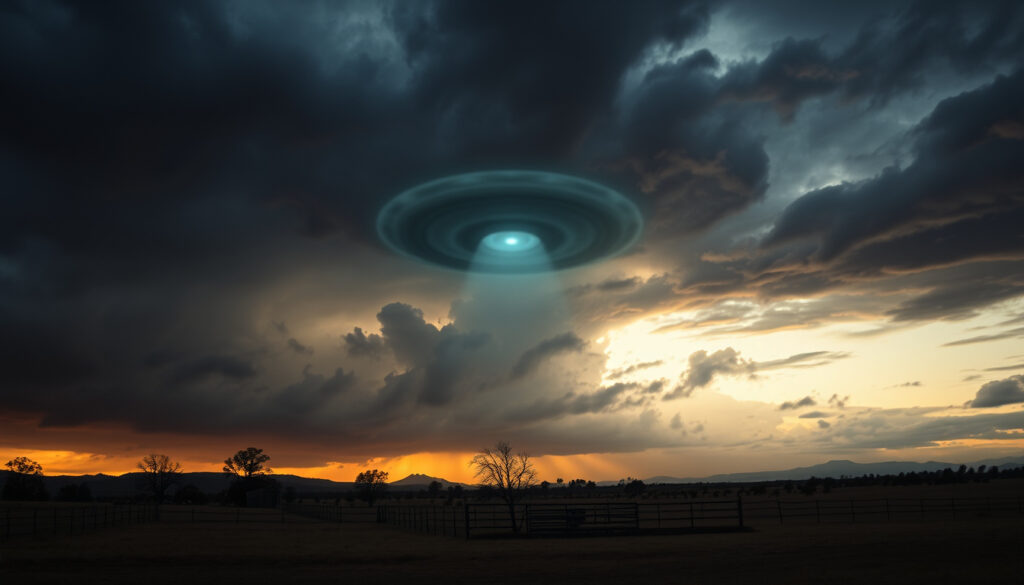
Nope (Film) – Plot, Cast, Ending Explained
Jordan Peele’s third feature film arrived in theaters with the weight of high expectations. After redefining modern horror with Get Out and Us, Peele returned to the director’s chair in 2022 with Nope, a neo-Western science fiction horror that pushed his signature blend of social commentary and visceral terror into uncharted territory. The film gathered an ensemble cast led by Daniel Kaluuya and Keke Palmer, telling the story of siblings who encounter something impossible while running their family horse ranch in the California desert.
Unlike Peele’s previous works, which drew heavily from psychological horror and home invasion tropes, Nope embraced a larger canvas—one that included aerial phenomena, spectacle culture, and humanity’s complicated relationship with observation and exploitation. The result was a film that divided critics and audiences while cementing Peele’s reputation as one of contemporary cinema’s most distinctive voices.
What is the Movie Nope About?
- The film presents an alien organism unlike typical UFO encounters—Jean Jacket acts as a territorial predator rather than a visiting intelligence
- Peele draws explicit connections between Hollywood exploitation and the film’s central conflict
- Production emphasized practical effects over CGI, reinforcing themes about authenticity versus fabrication
- The narrative centers on siblings OJ and Em Haywood, played by Kaluuya and Palmer respectively
- Themes of spectacle and the dangers of treating dangerous things as entertainment run throughout
- The story references the first recorded film clip, which featured an unnamed Black jockey
| Category | Details |
|---|---|
| Release Date | July 22, 2022 |
| Studio | Universal Pictures |
| Production Company | Monkeypaw Productions |
| Budget | $68 million |
| Box Office | $171 million worldwide |
| Rotten Tomatoes Score | 83% (Certified Fresh) |
| IMDb Rating | 6.8/10 |
Peele structured the production to prioritize practical effects and real animal performers wherever possible. This approach directly served the film’s thematic argument about Hollywood’s growing reliance on digital fabrication at the expense of genuine spectacle.
Who Stars in Nope and Who Directed It?
The Cast
Daniel Kaluuya took on the role of Otis “OJ” Haywood Jr., portraying a stoic horse wrangler who inherits his father’s ranch and must confront the impossible threat descending from the sky. Kaluuya brought the same understated intensity that earned him an Oscar for Get Out, creating a protagonist defined more by action than dialogue. His performance grounded the film’s cosmic horror in relatable human determination.
Keke Palmer starred as Emerald “Em” Haywood, OJ’s ambitious sister who dreams of escaping their rural life for Hollywood stardom. Palmer provided much of the film’s energy and comic timing while also serving as the audience surrogate who asks the questions the narrative demands. Her arc sees her transformation from self-interested dreamer to someone who discovers what genuine spectacle actually means.
Steven Yeun portrayed Ricky “Jupe” Park, the siblings’ neighbor who operates a Western theme park called Jupiter’s Claim. Yeun brought complex layers to a character shaped by childhood trauma—a 1998 chimp attack on the set of his sitcom Gordy’s Home left him with psychological scars that inform his fatal misunderstanding of Jean Jacket. The role marked a significant departure from Yeun’s breakthrough work in The Walking Dead.
Jordan Peele as Writer-Director
Peele wrote, directed, and produced Nope through his Monkeypaw Productions banner, maintaining the creative control that defined his earlier successes. His direction emphasized wide desert vistas and careful framing that often placed characters at the mercy of vast, empty skies—setting that became crucial to the film’s tension. Peele’s visual language evolved from the confined spaces of Get Out and Us to embrace the expansive scale of Western cinema.
Supporting cast included Brandon Perea as electronics worker Angel Torres, who provides the technological expertise needed to document the phenomenon, and Michael Wincott as veteran cinematographer Antlers Holst, whose professional pride drives him to capture footage of Jean Jacket regardless of the risk.
Nope Ending Explained
The Final Confrontation
The climax of Nope brought together the film’s thematic concerns into a single, devastating set piece. OJ recognized that Jean Jacket could be deceived through indirect observation—staring at the creature directly would mark someone as prey, while avoiding its gaze allowed safe passage. This understanding informed his strategy for the final confrontation at Jupiter’s Claim.
OJ positioned himself as bait, making direct eye contact with Jean Jacket while remaining still. The creature, unable to process prey that acknowledged its presence without fleeing, circled and hesitated. This gave Em the opening she needed to deploy a shaped helium balloon—appearing as Jean Jacket’s natural prey—that the organism consumed whole. Once inside the creature’s digestive system, the balloon expanded until Jean Jacket catastrophically ruptured.
What the Ending Means
Peele structured the final act to contrast two approaches to spectacle. Jupe’s attempt to commercialize Jean Jacket ended in massacre because he fundamentally misunderstood the creature’s nature—treating it as a celebrity to be displayed rather than a force to be respected. His trauma from the chimp attack had conditioned him to seek control through performance, a strategy that proved fatal.
The Haywoods succeeded precisely because they refused to exploit what they observed. OJ’s acceptance of his role as bait and Em’s decision to capture evidence rather than profit directly represented the film’s thesis: genuine spectacle demands humility and ethical boundaries. The image of Em emerging with photographic proof—captured on analog film, no less—suggested that authentic documentation remains valuable even when the subject has been destroyed.
A Bible quote from the Book of Nahum framed these events as something resembling divine judgment: those who exploit spectacle for profit will ultimately be consumed by it. Peele wove this religious undertone throughout the film, suggesting that America’s obsession with consumption and display carries spiritual consequences.
Is Nope Worth Watching? Reviews and Ratings
Critical response to Nope proved broadly positive, with the film earning a Certified Fresh designation on Rotten Tomatoes. The aggregate score of 83% reflected appreciation for Peele’s ambitious scope and thematic coherence, even among critics who found the execution less streamlined than his previous work. The consensus highlighted the film’s successful fusion of genres and its willingness to tackle weighty themes through genre conventions.
Audience reception told a somewhat different story. The audience score of approximately 68% suggested a gap between critical and popular appreciation. Some viewers found the pacing deliberate to a fault, while others appreciated the breathing room Peele provided for atmosphere and thematic development. The film’s resistance to easy explanation frustrated those seeking straightforward horror.
Several reviewers specifically praised Nope as a “modern classic,” citing its survival themes and intelligent commentary on how Hollywood processes and commodifies extraordinary events. These analyses focused on the film’s relevance amid industry changes brought by streaming and CGI dominance.
The box office performance validated both critical support and popular interest. With a production budget of $68 million, the film grossed approximately $171 million worldwide—a commercial success that exceeded expectations for a genre release with unconventional elements. This performance demonstrated that Peele’s particular blend of horror and social commentary retained audience appeal.
Nope Release Date and Production Facts
Universal Pictures released Nope in theaters on July 22, 2022. The premiere occurred in Los Angeles the preceding week, drawing industry attention and setting the stage for a summer release that competed against various blockbuster offerings. The timing positioned the film as counter-programming to more conventional genre fare while still capturing audience attention during peak moviegoing season.
- Announcement (2020): Peele revealed the project through Monkeypaw Productions with Universal Pictures attached
- Filming (2021): Principal photography took place primarily in Agua Dulce, California, and surrounding areas
- First Trailer (February 2022): Teaser materials introduced the UFO premise while maintaining mystery about the creature’s nature
- Premiere (July 2022): Los Angeles premiere preceded theatrical release
- Theatrical Release (July 22, 2022): Wide release across North American theaters
- Streaming Availability (Late 2022): Film became available on Peacock before expanding to other platforms
Production details revealed Peele’s commitment to practical filmmaking. The budget of $68 million enabled extensive location shooting in the California desert, the construction of Jupiter’s Claim set, and the development of elaborate practical effects for Jean Jacket. While some digital enhancement was necessary, Peele insisted on real animals, genuine stunts, and physical props wherever feasible.
Is Nope Based on a True Story?
Despite the film’s grounded approach and documentary-style elements, Nope is not based on a true story. Peele created original fiction that drew inspiration from UFO lore, Western cinema traditions, and Biblical imagery rather than any specific real-world events. The narrative explored themes of exploitation and spectacle through invented circumstances rather than adapting actual accounts.
What We Know for Certain About Nope
| Established Information | Unconfirmed or Unclear |
|---|---|
| Jean Jacket is a predatory alien organism, not a vehicle or conventional spacecraft | Whether Peele plans direct sequels or spin-offs |
| OJ survives the final confrontation, though his fate remains ambiguous during the climax | Full details of the creature’s origin or biology |
| The film critiques Hollywood exploitation through multiple narrative layers | Specific box office performance in individual international markets |
| Production prioritized practical effects over CGI where possible | Future streaming availability across various platforms |
| Critical consensus rates the film positively, though audience reception was more divided | Whether Jean Jacket’s destruction was intended to be permanent or if similar entities exist |
| The 1998 chimp attack on Gordy’s Home serves as backstory for Jupe’s character | Details about what Em photographed during the final confrontation beyond what is shown |
Some fan theories propose alternative interpretations of Jean Jacket’s nature and behavior. While Peele has discussed themes and intentions in interviews, specific lore about the creature’s origin remains largely unexplored in the film itself.
Jordan Peele’s Vision and Themes
Peele described Nope as a meditation on the spectacles we create and consume—a theme that connected directly to his ongoing critique of how America processes trauma, race, and identity through entertainment frameworks. The film explicitly referenced the first known film clip, which depicted an unnamed Black jockey on horseback. Peele saw in this historical footnote a metaphor for how certain stories get consumed and forgotten while others achieve mythology.
The Western genre provided structural scaffolding for this examination. By situating his alien encounter within the conventions of frontier storytelling, Peele recontextualized familiar tropes about humanity versus the unknown. Where classic Westerns often portrayed Native Americans as obstacles to civilization, Nope presented Jean Jacket as a force that exposed the exploitation underlying frontier mythology.
Peele’s directorial style continued evolving from his previous features. Where Get Out used contained spaces to generate claustrophobic tension and Us employed duality as its organizing principle, Nope embraced scale and landscape. The vast California desert became a character itself—empty, indifferent, and capable of hiding threats that simple observation cannot fully capture.
Critical Reception and Notable Quotes
The critical response to Nope highlighted Peele’s ambitious thematic scope while acknowledging the challenges of delivering genre satisfaction alongside substantive commentary. Several prominent reviews drew connections to his earlier work while noting how Nope attempted something structurally different. Wikipedia offers a comprehensive overview of the film’s production history and critical trajectory.
Peele has constructed something genuinely strange here—not merely an alien movie or a Western or a horror film, but an interrogation of why we watch, what we demand from spectacle, and what happens when the spectacle looks back.
— Time Magazine analysis of Peele’s thematic intentions
The film works as both survival narrative and industry critique, refusing to let its audience forget that the horror on screen mirrors our own complicity in consuming dangerous things as entertainment.
— Contemporary review of Nope as modern classic
Peele himself discussed his intentions in various interviews, emphasizing that he wanted to explore what happens when people treat genuinely dangerous phenomena as content. This commentary resonated particularly strongly given contemporary concerns about attention economics and the commodification of extraordinary events.
The Final Word on Nope
Nope stands as Jordan Peele’s most ambitious and polarizing work—a film that prioritized thematic complexity over conventional genre satisfaction while still delivering memorable imagery and genuine tension. Whether viewers found the balance successful often depended on their expectations going in. Those seeking straightforward horror may have been frustrated, while audiences interested in genre filmmaking as a vehicle for social commentary discovered much to appreciate. The film confirmed Peele’s position as a distinctive voice in American cinema, one willing to take risks that occasionally exceeded his reach but never his ambitions. For those interested in exploring similar thematic territory, the intersection of horror and cultural criticism offers rich territory for further investigation, such as understanding how contemporary productions examine difficult subjects through genre frameworks.
Frequently Asked Questions About Nope
Where can I watch Nope online?
Availability varies by region and platform. The film debuted on Peacock before expanding to other streaming services. Check major platforms like Netflix, Prime Video, or rental services for current options in your area.
Is Nope a good movie?
Critical reception was broadly positive, with an 83% Rotten Tomatoes score. Audience response was more mixed. The film appeals most to viewers who appreciate genre filmmaking with thematic substance rather than pure entertainment.
What does the title “Nope” mean in the movie?
The title references the instinctive refusal to engage with something dangerous or unknowable. In context, it reflects the characters’ varying responses to the threat they face and the film’s broader commentary on human curiosity versus self-preservation.
Who directed Nope?
Jordan Peele wrote, directed, and produced Nope. It marked his third feature film following Get Out (2017) and Us (2019), continuing his partnership with Monkeypaw Productions and Universal Pictures.
Does Nope have a post-credit scene?
No post-credit scenes appear in the theatrical version. The narrative concludes definitively with the aftermath of Jean Jacket’s destruction and the arrival of reporters at the Haywood ranch.
What streaming platform has Nope?
Peacock holds streaming rights as a Universal Pictures title. Regional availability may differ, so checking specific platform listings in your area provides the most accurate current information.
Is Nope scary?
The film contains horror elements including tension, jump scares, and violent sequences. However, its pacing and emphasis on thematic content mean it differs from traditional horror. Genre blending makes it accessible to viewers who typically avoid horror-focused films.
More related posts
 FC Barcelona Matches: Schedule, Tickets & Live Streams
 Andy Byron Astronomer Wife: Megan Kerrigan & Family Update
 AMC Lincoln Square 13: IMAX Size, Showtimes & Cheap Tickets
 How Long Does Ibuprofen Last? Duration, Safety, Guidelines
 How Long to Steam Broccoli? Stovetop, Microwave & More
 Luka Doncic Career Stats: Points, Assists, All-Star Selections
 Jordan 4 Cave Stone: Release Date, Price & Design Guide
 Doctor Who 2005: Watch Guide, Cancel Rumors, LGBTQ+ History