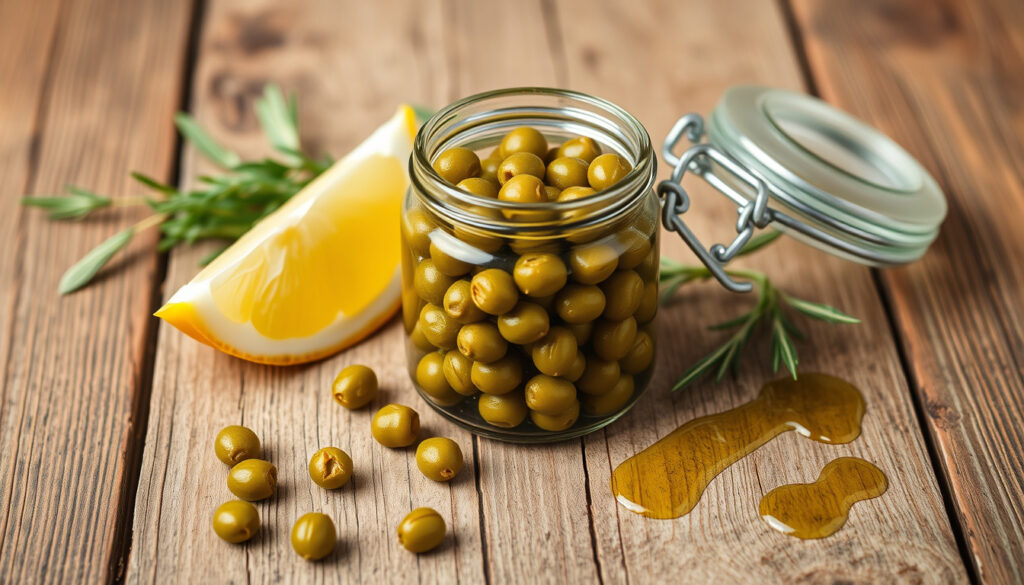
What Is a Caper? Definition, Taste, and Health Benefits
If you’ve ever spotted tiny green spheres on a pasta dish or in a jar at the market and wondered what they are, you’re not alone. Capers are a centuries-old ingredient that adds a burst of salty, tangy flavor to everything from chicken piccata to bagels with lox.
Botanical Name: Capparis spinosa · Common Form: Pickled flower buds · Flavor Profile: Salty, tangy, lemony · Region of Origin: Mediterranean · Size Range: 5–10 mm
Quick snapshot
- Capers are the unopened flower buds of Capparis spinosa (University of Wisconsin–Madison Extension – horticulture research)
- They are pickled or brined before consumption (Healthline – nutrition editorial)
- Caper berries are the fruit of the same plant (Tablet Magazine – cultural food journalism)
- The exact historical origin of caper cultivation is uncertain (Tablet Magazine – cultural food journalism)
- Some sources claim capers are mentioned in the Bible, but interpretation varies (Tablet Magazine – cultural food journalism)
- According to some sources, capers were used in folk medicine in ancient Greece (Nonna Box – food history blog)
- Capers remain a go-to ingredient in Mediterranean cooking and are increasingly used in plant-based dishes (WebMD – health information site)
| Attribute | Value |
|---|---|
| Scientific Name | Capparis spinosa |
| Plant Type | Perennial shrub |
| Edible Part | Flower buds (capers) and fruit (caper berries) |
| Processing | Pickled in brine, vinegar, or salt |
| Flavor | Salty, tangy, with a hint of lemon |
The pattern here is clear: capers are a pickled flower bud, not a fruit or seed, and their intense flavor comes from a brining process that also makes them a high-sodium ingredient.
What Are Capers and What Do They Taste Like?
What part of the plant are capers?
Capers are the unopened flower buds of the caper bush, Capparis spinosa, which grows as a prickly shrub in hot, dry climates around the Mediterranean and parts of Asia (Food Network – culinary resource). The buds are harvested while still closed to preserve their firm texture and concentrated flavor. The University of Wisconsin–Madison Extension (horticulture research) emphasizes that the edible part is indeed the bud, not the fruit — though the plant also produces caper berries, which are the immature fruit (UW Extension).
How are capers processed?
Fresh caper buds are too bitter and astringent to eat raw. They are pickled or cured in brine, vinegar, or salt, which transforms them into the tangy, savory ingredient we know (Healthline – nutrition editorial). The brining process not only preserves the buds but also infuses them with saltiness and a complex, almost lemony sharpness.
What does a caper taste like?
Most tasters describe capers as salty, tangy, briny, and slightly bitter or pungent, with a faint lemony note (Food Network). They are often compared to green olives in brininess, but capers are more floral and tart. The exact flavor varies depending on whether the product is packed in salt, brine, or vinegar (WebMD).
The briny, intense flavor of capers means a little goes a long way: a tablespoon of capers can replace a full pinch of salt in a recipe. For home cooks looking to reduce sodium elsewhere, capers offer a flavor-packed swap — but the trade-off is that they themselves are very high in sodium.
Is a Caper an Olive or a Fish?
Are capers olives?
No. Despite the occasional visual similarity, capers are not olives. Olives are the fruit of the olive tree (Olea europaea), while capers are flower buds from an entirely different plant family (Food Network). The confusion likely arises because both are brined and share a similar salty, savory profile.
Are capers a type of fish?
No. The only fish connection is phonetic: “caper” sounds like “capelin” or “caper” in certain contexts. Capers are 100% plant-based — a pickled bud, not a marine creature (Healthline). This question pops up often enough that it deserves a clear answer.
What is the difference between capers and olives?
- Capers are flower buds; olives are fruit.
- Capers are smaller (5–10 mm) and more intensely tart; olives vary widely in size and flavor.
- Capers are typically used as a garnish or seasoning; olives are eaten as a snack or salad ingredient.
The pattern: both are brined staples of Mediterranean cuisine, but their botanical origins and culinary roles are distinct.
If a recipe calls for olives and you substitute capers, expect a much more acidic, less oily result. For the home cook curious about swaps, capers work best where you want a briny punch — not the buttery richness of an olive.
Can You Eat Capers Raw?
Are raw capers safe to eat?
Raw, unprocessed caper buds are not edible — they are extremely bitter and astringent. The curing process breaks down those compounds and makes them palatable (Food Network). However, once pickled or salted, capers are ready to eat straight from the jar.
How should capers be prepared before eating?
Do you need to rinse capers?
Rinsing is optional but recommended for salt-packed capers, since a quick rinse can remove up to 40% of the surface sodium (Healthline). Brine-packed capers are already less salty, but draining is enough. Many chefs add them straight to the pan at the end of cooking to preserve their texture.
The catch: while capers can be eaten cold, they benefit from brief heating to meld with other flavors — but don’t fry them for too long or they become tough.
Are Capers Healthy for You?
Nutritional profile of capers
Capers are low in calories and fat, making them a useful tool for adding flavor with minimal energy cost (WebMD). A tablespoon of canned capers contains about 2 calories and provides small amounts of fiber, vitamin K, vitamin E, and minerals like iron and calcium. They are also rich in antioxidants, particularly flavonoids like quercetin, which have been studied for their anti-inflammatory effects (PMC / NIH – peer-reviewed research).
Are capers good for diabetics?
Because capers have a low glycemic index and contain no significant sugar, they are considered safe for people with diabetes when used in moderation. The same review in PMC / NIH (peer-reviewed research) notes that caper extracts have shown potential antidiabetic activity in preclinical studies (PMC). However, the high sodium content is a concern for anyone managing blood pressure, including many people with diabetes.
Health benefits and potential risks
- Benefits: Antioxidants, low calorie, possible anti-inflammatory and digestive aid (traditional use). Studies also suggest hepatoprotective and neuroprotective potential (PMC).
- Risks: High sodium. A tablespoon of capers can contain 200–300 mg of sodium, which accounts for about 10–15% of the daily limit (Healthline). People with hypertension or heart conditions are advised to use capers sparingly (Tablet Magazine).
Why this matters: capers are a nutrient-dense flavor booster, but their salt content means they are best treated as a condiment, not a vegetable serving.
What Is a Caper Bush and Its Parts?
What is a caper bush?
The caper bush (Capparis spinosa) is a perennial shrub native to the Mediterranean region, known for its trailing, thorny branches and striking flowers (Food Network). It thrives in hot, dry climates and is often found growing wild on rocky slopes or cultivated in vineyards. The plant is prized for its buds, but also produces caper berries — the fruit that develops after the flowers are pollinated.
What are caper berries?
Caper berries are the immature fruit of the caper bush, larger than buds and often pickled whole (Tablet Magazine). They resemble small olives with a stem attached, and have a milder, less puckering flavor than capers. They are less common in Western supermarkets but popular in Spain and Italy.
What is a caper fruit?
The term “caper fruit” is sometimes used interchangeably with caper berry. Botanically, the fruit is the mature ovary of the flower, containing seeds. Unlike the buds, the fruit can be eaten raw when fully ripe, but is almost always pickled for preservation and flavor (Tablet Magazine).
The pattern: the caper plant offers two edible products — the intense bud (caper) and the milder berry (caper fruit) — each with its own place in the kitchen.
Upsides
- Adds intense flavor with few calories
- Rich in antioxidants (quercetin)
- Low sugar, suitable for low-carb diets
- Long shelf life when pickled
Downsides
- Very high sodium content
- Potential for bitter taste if overused
- Not a complete food; used in small amounts
- Limited availability of fresh buds outside of Mediterranean regions
The implication for the home cook: use capers as a potent accent, not a main component.
What we know vs. what’s uncertain
Confirmed
- Capers are flower buds of Capparis spinosa (UW Extension)
- They are pickled before consumption (Healthline)
- Caper berries are the fruit of the same plant (Tablet Magazine)
- They contain quercetin and other antioxidants (PMC)
Unclear
- Exact historical origin of caper cultivation is uncertain
- Whether capers are mentioned in the Bible is debated (Tablet Magazine)
- Some health claims (e.g., antidiabetic, hepatoprotective) are based on preliminary studies, not human trials (PMC)
Expert perspectives
The plant is best known for the edible flower buds (capers), used as a seasoning or garnish.
– Wikipedia (community-edited encyclopedia)
Capers are the pickled unopened flower buds of the plant Capparis spinosa.
– University of Wisconsin–Madison Extension (horticulture research)
For the everyday cook, the choice is clear: use capers sparingly as a flavor accent, and always account for the sodium they bring. If you are watching your salt intake, rinse salt-packed capers before using, or choose brine-packed and drain well.
foodnhotelasia.com, nutrition-and-you.com, supplements.selfdecode.com, pmc.ncbi.nlm.nih.gov, rimping.com, en.wikipedia.org
Frequently asked questions
What does the Bible say about capers?
The Hebrew word “caper” (אֲבִיּוֹנָה) appears in Ecclesiastes 12:5, where it is often translated as “caperberry.” Some scholars interpret this as a reference to the caper fruit, used as an aphrodisiac or stimulant. However, the translation is disputed, and other versions render it “desire” or “appetite.” (Tablet Magazine)
Are capers gluten-free?
Yes, capers themselves are naturally gluten-free. However, some brines or vinegar solutions may contain gluten if cross-contaminated. Always check the label – most major brands are gluten-free.
How should I store capers?
Store opened capers in their brine in a sealed jar in the refrigerator. They will keep for up to a year. If the brine becomes cloudy or mold appears, discard them.
Can capers be substituted in recipes?
Chopped green olives or pickled green peppercorns are the closest substitutes. For a less briny alternative, use chopped artichoke hearts or sun-dried tomatoes.
What is the difference between capers and caper berries?
Caper berries are the fruit of the caper bush, larger and milder in flavor, often sold with stems attached. Capers are the smaller, more intensely flavored flower buds.
Are capers keto-friendly?
Yes. Capers contain negligible carbs and no added sugar, making them suitable for a ketogenic diet. Watch the sodium intake, though.
Do capers need to be cooked?
No. Ready-to-eat pickled capers can be eaten straight from the jar. Heat them briefly in sauces or sauté them at the end of cooking to soften their texture.
More related posts
 49ers vs Bears Player Stats: Key Performances in Week 17 Win
 CoComelon Wheels on the Bus: 15 Min, Lyrics, Toy & Videos
 Jurassic Park 2 Cast: Full List of Actors and Characters
 Flights to Puerto Rico from Ireland: Best Times & Tips
 June 2025 Social Security Schedule: Payment Dates and COLA Update
 White Lotus Season 3 Cast – Full List and Returning Stars
 Spartacus: House of Ashur Canceled – Season 2 & Viewing Guide
 Windows Media Creation Tool: Download, USB & Upgrade Guide